Peyote Stitch for Beginners: Flat Even-Count, Step by Step
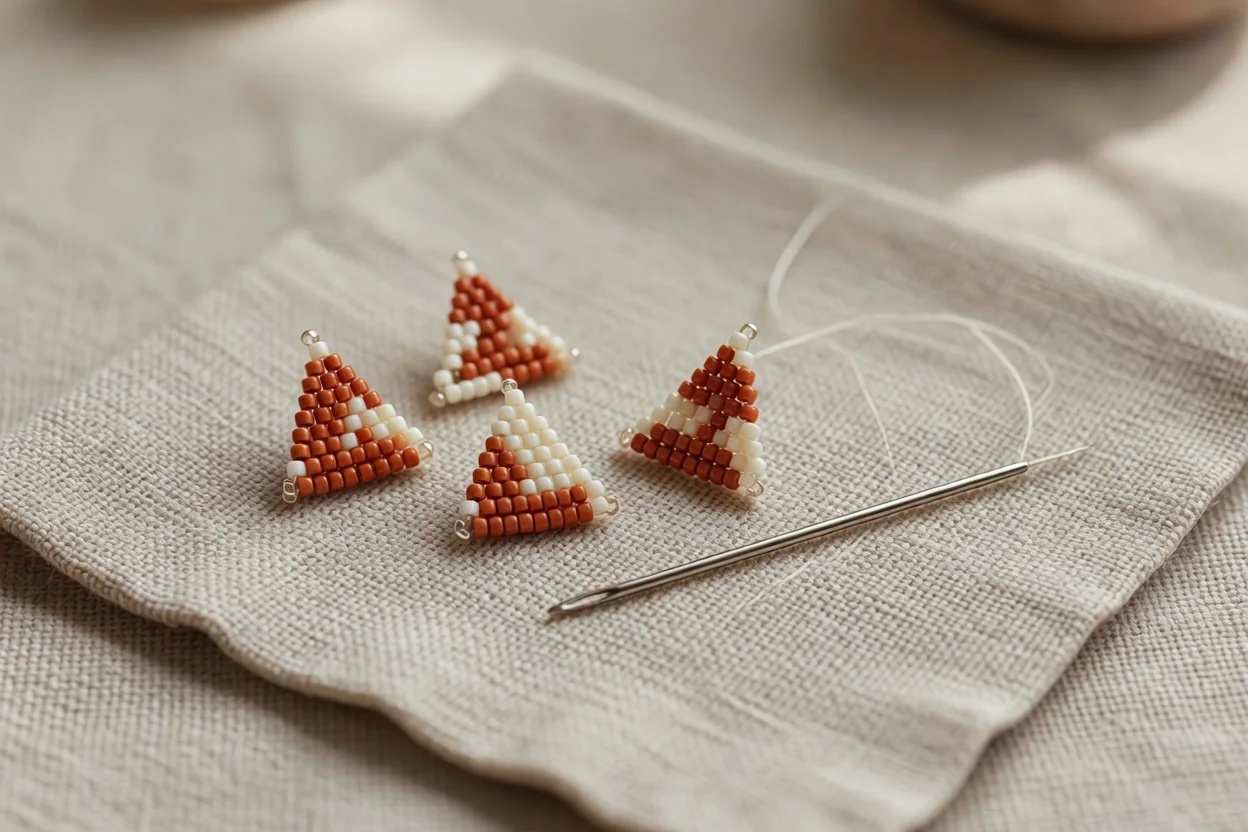
Peyote stitch is a simple off-loom beadweaving technique where each new bead is added between two beads from the previous row, creating a staggered, brick-like pattern. The result looks like a supple fabric of tiny tiles that drapes nicely and holds its shape once tension is even. Flat even-count peyote is the easiest version for beginners because the row count stays consistent and the edges line up neatly.
Most newcomers find the first two rows frustrating. The beads refuse to sit straight, the thread looks messy, and the whole thing feels like it is falling apart. That is completely normal. The weave only reveals its tidy offset pattern after the third row locks everything into place. With a little patience the awkward stage passes quickly.
Gathering Your Materials
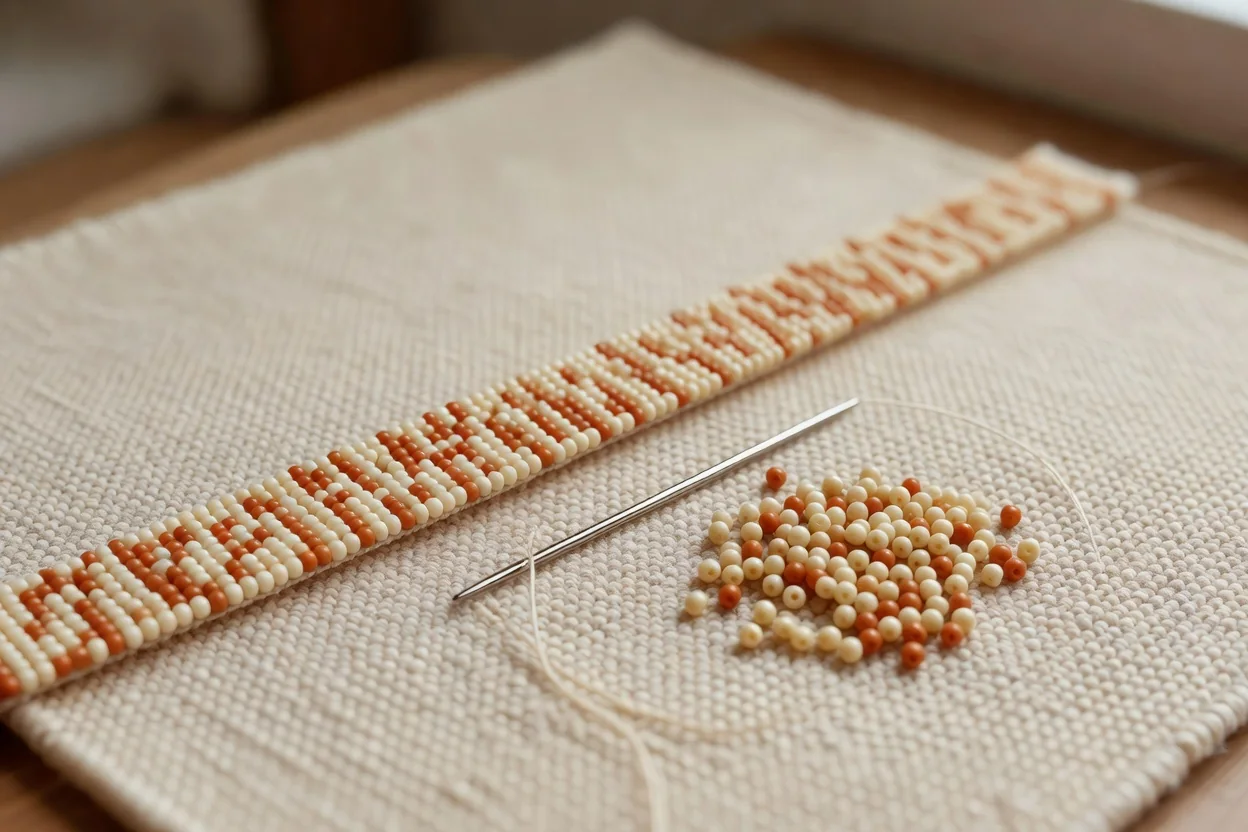
Choose uniform cylinder beads such as size 11/0 or 10/0 for the cleanest look; round seed beads work too but the finished strip will be slightly more rounded. Use a size 10 or 12 beading needle and braided beading thread like Fireline or Nymo in a color that matches your beads. A single stop bead at the start keeps everything from sliding off. Typical starting length for a small swatch is about 18–24 beads wide.
Starting Your First Swatch: Numbered Steps
- Pick up 20 cylinder beads on your thread and slide them down, leaving a 6-inch tail. This is Row 1.
- Add a stop bead by passing the needle back through the last bead in the opposite direction and pulling snug.
- For Row 2, pick up one new bead, skip the first bead of Row 1, and pass through the second bead. Repeat across the row. The new beads will sit at an angle.
- For Row 3, pick up one bead and pass through the first raised bead from Row 2. Continue zigzagging through every raised bead, adding one new bead each time.
- From Row 4 onward, the pattern repeats: pick up a bead, skip the bead that sticks out, and go through the next recessed bead. The edges should now look straight.
- After 10–12 rows, your swatch will feel stable and the brickwork pattern becomes obvious.
Keeping edge beads tight is mostly about consistent tension. Pull each new bead firmly into its pocket but avoid yanking so hard that the fabric cups. Tension comes with practice; the first few inches often look uneven and that is expected. Simply continue stitching and the earlier rows will settle as later rows add support.
Key points
- Start with larger seed beads such as 8/0 before moving to 11/0.
- Use a stop bead so the first row cannot slide off the thread.
- Expect the first three rows to look messy; they settle from row four.
| Common Problem | Cause | Fix |
|---|---|---|
| Rows look wavy or loose | Thread tension too relaxed | Pull each stitch snug; use a tighter thread if needed |
| Edges flare outward | First two rows not locked tightly | Redo the stop bead and pull Row 3 very firmly |
| Thread breaks mid-project | Repeated passes through same beads | Add new thread when 6 inches remain; weave in old tail later |
| Beads refuse to sit flat | Using mixed bead sizes | Switch to uniform cylinders for the first projects |
Joining Into a Ring or Bracelet Band
When your strip reaches the desired length, remove the stop bead and weave the tail through the first row to align the edges. The raised beads on one end should nest between the raised beads on the other. Pass the needle through matching beads on both ends several times to zip the strip into a seamless tube or flat band.
For a simple bracelet, add a clasp or simply stitch the ends together and reinforce with extra passes. Adding new thread mid-project is straightforward: weave the new thread through several rows in the same zigzag pattern, tie a small knot inside the work, then trim and continue stitching as usual. The knots stay hidden inside the beadwork.
Flat even-count peyote rewards steady hands more than perfect technique. Keep your stitches even, let the first rows be messy, and trust that the pattern will emerge. Within an hour most beginners produce a small, neat swatch they are proud to turn into a ring or delicate bracelet band.