Crimps, Knots and Clasps: Finishing Beaded Jewelry So It Lasts
In the studio, the difference between a necklace that survives years of wear and one that falls apart after a single party often comes down to the last ten minutes of work. Crimps, knots, and clasps are the quiet heroes of beaded jewelry. Get them right and your pieces stay secure, elegant, and professional. In 2026, with more makers selling online and at craft fairs, these finishing techniques matter more than ever.
Good crimping still starts with choosing the right product. Crimp tubes offer superior grip compared to crimp beads because their larger surface area compresses evenly around the wire. The classic two-step process remains essential: first flatten the tube with the back notch of your crimping pliers to create a crease, then fold the wings inward using the front notch for a smooth, rounded finish. Crimp covers hide any remaining angular look, while wire guardians protect soft thread or cord from the sharp edges of metal findings.
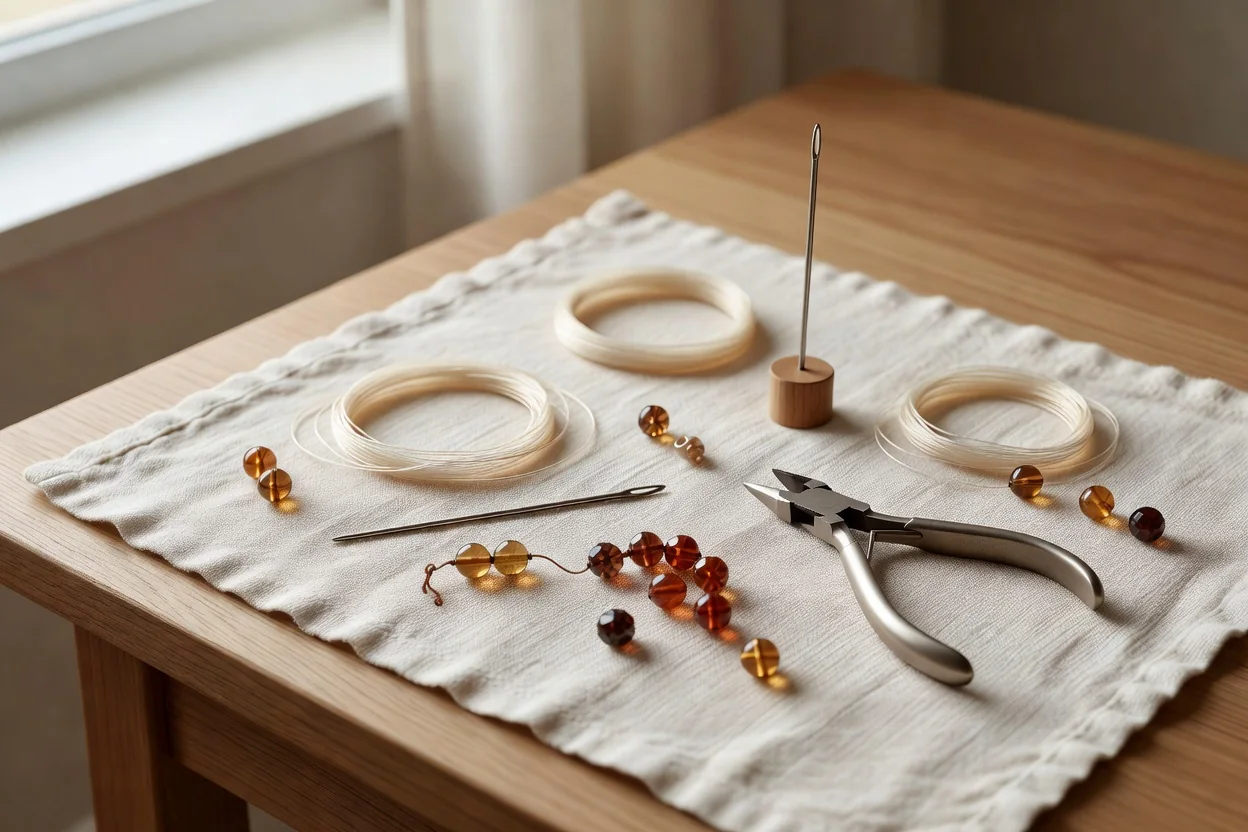
Crimping Done Right
Always match crimp size to your stringing material. A 2x2mm tube works beautifully with .018" or .019" flexible beading wire but will chew through finer threads. After crimping, give the wire a firm tug. If it slides, start again. Many makers now use a tiny drop of jeweler’s glue inside the tube before crimping for extra insurance on heavy pieces. Crimp covers, slipped on with chain-nose pliers, turn functional hardware into a decorative element that matches your clasp metal.
When Knotting Makes Sense
Knotting between every bead using silk thread or nylon cord gives a necklace fluid movement and prevents beads from sliding or rubbing. Traditional pearl knotting, where each knot sits snug against the bead, remains the gold standard for valuable pearls or delicate gemstones. The technique takes patience, but the payoff is worth it on pieces you plan to wear often or sell at higher price points. For casual everyday jewelry with larger beads, knotting every third or fourth bead often provides enough security without the extra time.
Silk thread offers the softest drape but can stretch over time. Many makers now prefer pre-stretched nylon for its stability. Whatever you choose, practice the half-hitch or overhand knot until you can pull it tight without damaging the thread. A fine needle and good lighting remain your best friends here.
Choosing the Right Findings
The clasp is the hardest-working part of any necklace. Lobster claws offer excellent security for daily wear, while toggle clasps provide an elegant focal point on shorter pieces. Magnetic clasps have improved dramatically and now hold surprisingly heavy strands, making them ideal for customers who struggle with traditional closures. Jump rings should always be closed with two pairs of pliers so the edges meet flush; anything less looks sloppy and compromises strength.
Match the weight and finish of your findings to the overall piece. A delicate 14k gold-filled chain deserves finer clasps than a chunky statement necklace made with Czech glass. Test every finished piece by wearing it yourself for at least an hour. Swing your arms, bend over, and check for weak spots. If it survives your daily movements without shifting or pinching, it’s ready for customers.
| Finishing Method | Security | Look | Difficulty |
|---|---|---|---|
| Crimping with tubes | High | Clean, minimal | Easy after practice |
| Pearl knotting | Very High | Soft, classic | Moderate |
| Toggle clasp | Medium-High | Decorative | Easy |
| Magnetic clasp | Medium (improved in 2026 models) | Modern, seamless | Very Easy |
Take time with these final steps. A beautifully beaded strand deserves a professional finish that protects both the piece and the person wearing it. Whether you’re making gifts for friends or building an inventory for spring markets, consistent, thoughtful finishing turns good jewelry into pieces that last.
- Always test your crimps with a strong pull before trimming wire tails.
- Choose clasp size based on bead weight rather than aesthetics alone.
- Keep multiple widths of crimp tubes and several clasp styles on hand.
- Practice new techniques on short sample strands before committing to a full piece.