Jewelry Findings Explained: Clasps, Jump Rings, Headpins and Crimps
Jewelry findings are the small but essential components that turn loose beads and wire into finished, wearable pieces. In 2026, beginners still benefit from understanding these building blocks before investing in supplies. A well-chosen clasp or jump ring can make the difference between a necklace that stays secure all day and one that falls apart at the first tug.
Most findings come in families that serve distinct purposes. Clasps secure the ends of a necklace or bracelet. Jump rings connect components. Headpins and eyepins let you create dangling elements. Ear wires and posts form the foundation of earrings. Crimps, wire guardians, bead tips, and calottes handle the often-invisible work of finishing and protecting your stringing material.
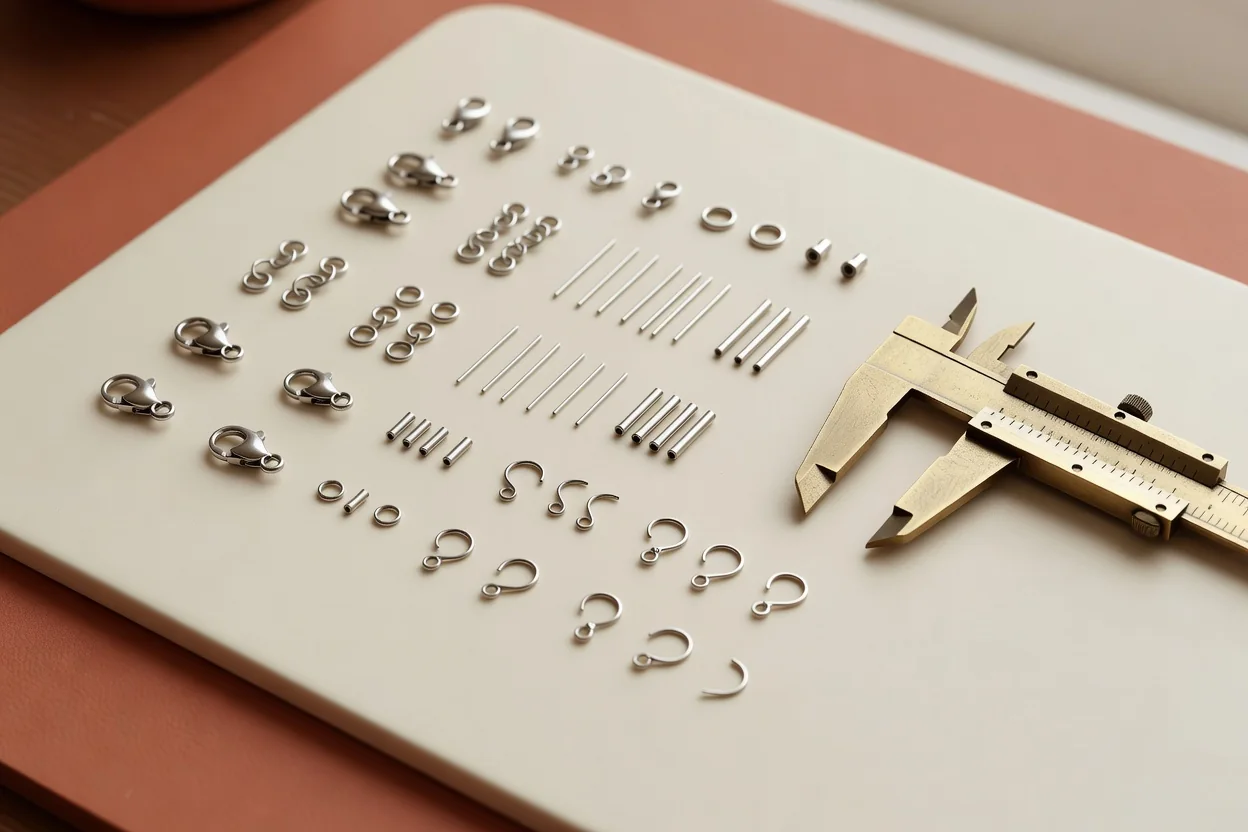
Clasps and Their Personalities
Lobster clasps offer reliable security with a spring-loaded hook that snaps into a ring. Toggle clasps feature a bar that passes through a loop and sit decoratively on the front of a piece. Magnetic clasps click together easily but can separate under heavy weight. Spring ring clasps remain a budget-friendly classic though they can pinch skin. Choose based on the weight of your design and how easily you want the piece to open.
Jump Rings, Headpins, and Ear Findings
Jump rings come in open and soldered versions. Open rings have a cut that allows you to twist them apart and reclose; soldered ones are seamless and stronger. Gauge refers to wire thickness—lower numbers mean thicker, sturdier wire—while inner diameter determines how much fits inside. Headpins resemble long straight pins with a flat or decorative head; slide on beads and bend the top into a loop. Eyepins already have a loop at one end. Ear wires swing gently, while posts push through the earlobe and secure with a butterfly back or screw.
Crimp tubes squeeze onto beading wire to lock everything in place. Crimp covers slide over the flattened tube for a polished look. Wire guardians protect cord from rubbing against sharp metal edges. Bead tips and calottes hide knots at the ends of silk or cotton cord, giving a neat finish.
Metal Choices in Plain Language
Plated base metal offers the lowest cost and widest color range but wears off over time, especially at contact points. Stainless steel resists tarnish and suits sensitive skin though it feels heavier. Sterling silver contains real silver mixed with copper for strength; it develops a soft patina unless polished regularly. Gold-filled bonds a thick layer of karat gold to a base metal core and lasts far longer than plating.
Match metal color and weight to the overall piece. A delicate pearl necklace looks odd with heavy brass toggles. Skin sensitivity matters—some people react to nickel in plated findings or the copper in sterling. Test pieces against your wrist before committing to a full project.
Key points
- Choose clasp size for the weight of the piece, not for looks alone.
- Closed or soldered jump rings survive daily wear better than open ones.
- Buy findings in the same metal family across one piece for a clean finish.
| Finding | Job | Beginner Mistake to Avoid |
|---|---|---|
| Lobster clasp | Secures necklace or bracelet | Using one too small for the chain weight |
| Open jump ring | Connects components | Opening by pulling ends apart instead of twisting |
| Headpin | Creates bead dangles | Cutting wire too short to form a proper loop |
| Crimp tube | Finishes beading wire | Flattening with pliers instead of a crimping tool |
| Wire guardian | Protects cord from abrasion | Forgetting to thread it before attaching the clasp |
Start simple. Buy a small mixed pack of sterling silver or stainless findings to practice. Learn to open and close jump rings properly—twist the sides away from each other rather than prying them open. Practice crimping on scrap wire until the tube folds neatly into a smooth barrel. These small skills compound quickly and prevent frustration later.
Consider the entire design when selecting findings. A bold statement necklace needs a substantial toggle that can handle movement. Delicate chain earrings pair better with thin ear wires that won’t overpower the design. Over time you’ll develop preferences—some makers love the click of a magnetic clasp while others trust only lobster for daily-wear pieces.
Keep a small divided box for each category. Label clearly: “18ga 5mm jump rings,” “2x2mm crimps,” “sterling headpins.” Organization saves time and reduces the temptation to use the wrong size simply because it’s handy. With practice, these once-mysterious bits become second nature, letting you focus on the creative part—choosing beautiful beads and inventing new combinations.