Beading Threads, Cords and Wires: Choosing the Right Stringing Material
In 2026, the world of handcrafted jewelry continues to reward makers who understand their stringing materials. Choosing the right thread, cord, or wire can mean the difference between a piece that drapes beautifully for years and one that frays, stretches out of shape, or snaps at the first tug. Whether you’re weaving intricate peyote patterns or simply stringing a casual bracelet, the material you pick must match both the beads and the intended wear.
Start by considering the project’s demands. Off-loom weaving calls for something that slides smoothly through tiny holes yet holds tension without sagging. Braided polyethylene thread offers excellent strength and almost no stretch, making it ideal for geometric designs that need crisp lines. Nylon beading thread, by contrast, has a bit more give and can be conditioned with beeswax or synthetic thread conditioner to reduce fraying. Both resist abrasion far better than older cotton threads, but polyethylene edges out in long-term durability tests that makers perform themselves on sample swatches.
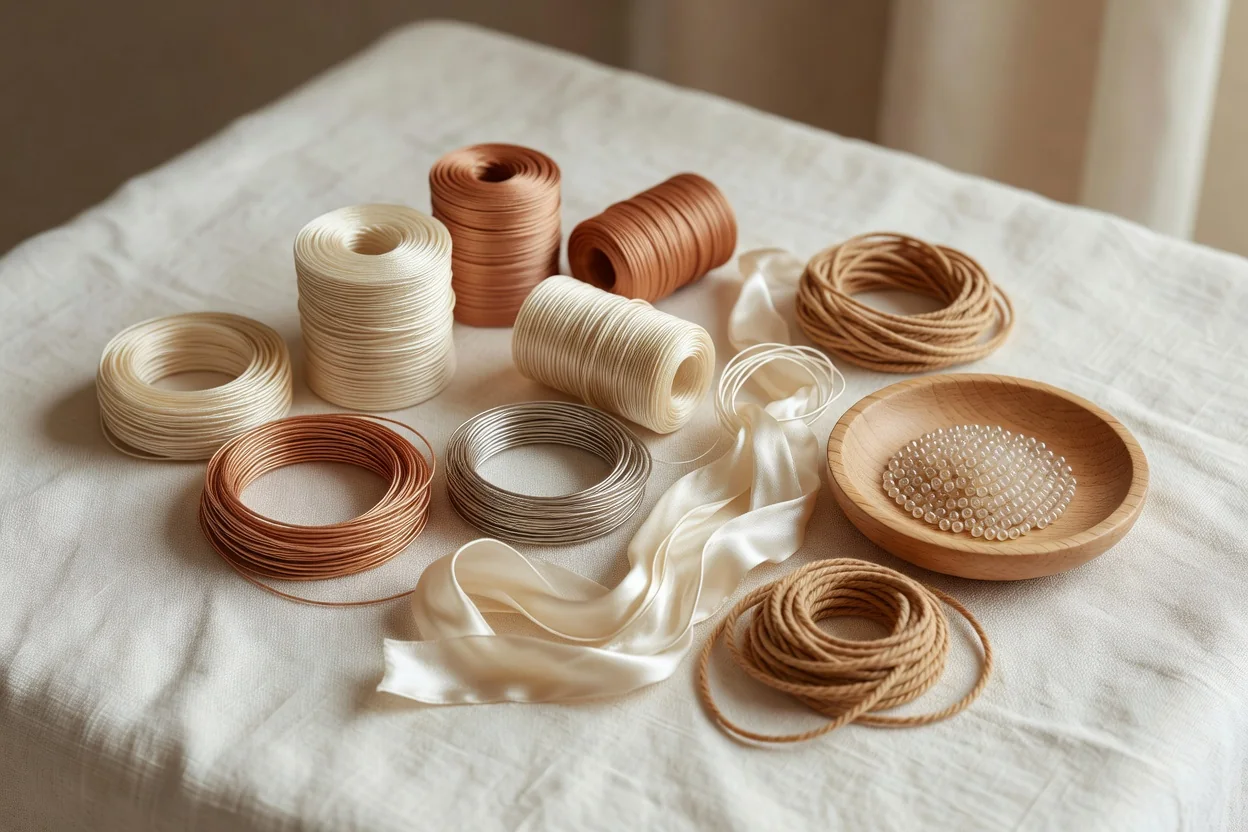
Specialty Threads for Classic Techniques
Silk thread remains the gold standard for knotting between pearls and other delicate gemstones. Its natural fibers create secure, unobtrusive knots that cushion each bead and prevent rubbing. A typical diameter of 0.5–0.8 mm works for most freshwater pearls with 0.8–1.0 mm holes. Doubling the thread not only increases strength but also fills the hole more completely, reducing the chance that beads will slide or twist on the strand. Always pre-condition silk by running it through a small block of beeswax before knotting; this adds water resistance and helps the knots hold their shape.
Wires, Cords, and Memory
Beading wire—usually stranded stainless steel coated in clear nylon—comes in different flexibility grades determined by strand count. A 7-strand version feels supple enough for gentle curves yet resists kinking better than single-strand wire. For heavier beads or designs that need more drape, 19-strand or 49-strand options behave almost like soft cord while retaining impressive tensile strength. Match the wire diameter to bead hole size: 0.015 inch (about 0.38 mm) passes easily through most seed beads, while 0.024 inch (0.61 mm) suits larger gemstone or metal beads with holes 1 mm and up.
Elastic cord simplifies stretch bracelets. A 0.8 mm or 1 mm diameter provides enough tension for most adult wrists when used in single strands.
Always pre-stretch the cord by pulling it gently several times before stringing; this removes the initial “creep” that can leave a finished bracelet loose after a few wears. Leather and waxed cotton cords suit bolder, casual designs. Leather offers a rich color range and natural suppleness, while waxed cotton provides a matte finish that works beautifully with rustic wood or ceramic beads. Both require larger bead holes—typically 1.5–3 mm—and benefit from a drop of glue or a simple knot-and-crimp finish.
Memory wire, the pre-coiled stainless steel that retains its circular shape, works well for quick bangles but has clear limits. Its rigidity means it cannot be adjusted once formed, and repeated bending at the same point will eventually cause metal fatigue. Use it for designs where the fixed size is part of the appeal, and always finish ends with a loop or bead to protect the wearer from sharp tips.
| Material | Flexibility | Strength | Best Use |
|---|---|---|---|
| Braided Polyethylene Thread | Low | Very High | Off-loom weaving, structured pieces |
| Nylon Beading Thread | Medium | High | General beading, seed bead projects |
| Silk Thread | High | Medium | Pearl knotting, delicate strands |
| Stranded Beading Wire | Medium to High (by strand count) | Very High | Necklaces, bracelets with heavier beads |
| Elastic Cord | Very High | Medium | Stretch bracelets |
| Leather / Waxed Cotton Cord | High | Medium-High | Casual, boho, or statement designs |
| Memory Wire | Very Low | High | Fixed-size bangles and cuffs |
Ultimately, the right stringing material is the one that disappears into the design while quietly doing its job for years. Test short sample pieces under normal wear conditions—bend them, tug them, let them sit in a jewelry box for a month—before committing to a full project. In 2026’s thriving maker community, that hands-on knowledge still separates beautiful, lasting jewelry from pieces that disappoint after a single season.
- Always match diameter to bead hole size with at least 0.2 mm clearance for easy passage and knotting room.
- Doubling thread adds both strength and stability when holes allow it.
- Pre-stretch elastic cord to minimize later loosening.