How to Choose Beads in 2026: Glass, Gemstone and Seed Beads Compared
In 2026 the bead market offers more variety than ever, yet the core families remain the same: glass, gemstone, and seed beads. Choosing the right ones for your handmade jewelry depends on understanding their individual personalities rather than chasing trends. Glass beads bring reliable shine and affordability, gemstones deliver natural depth and weight, while seed beads excel at intricate patterns and texture. Each type behaves differently when strung, wired, or woven, so matching the material to your project prevents frustration later.
Start by considering the finished piece. A delicate necklace that drapes softly needs lightweight beads with smooth holes. Bold statement earrings can handle heavier gemstones or chunky ceramic accents. Always buy small quantities first—ten grams of new seed beads or a single strand of gemstones—until you know how the material feels in your hands and holds up to daily wear.
Glass Beads: Czech Pressed and Fire-Polished
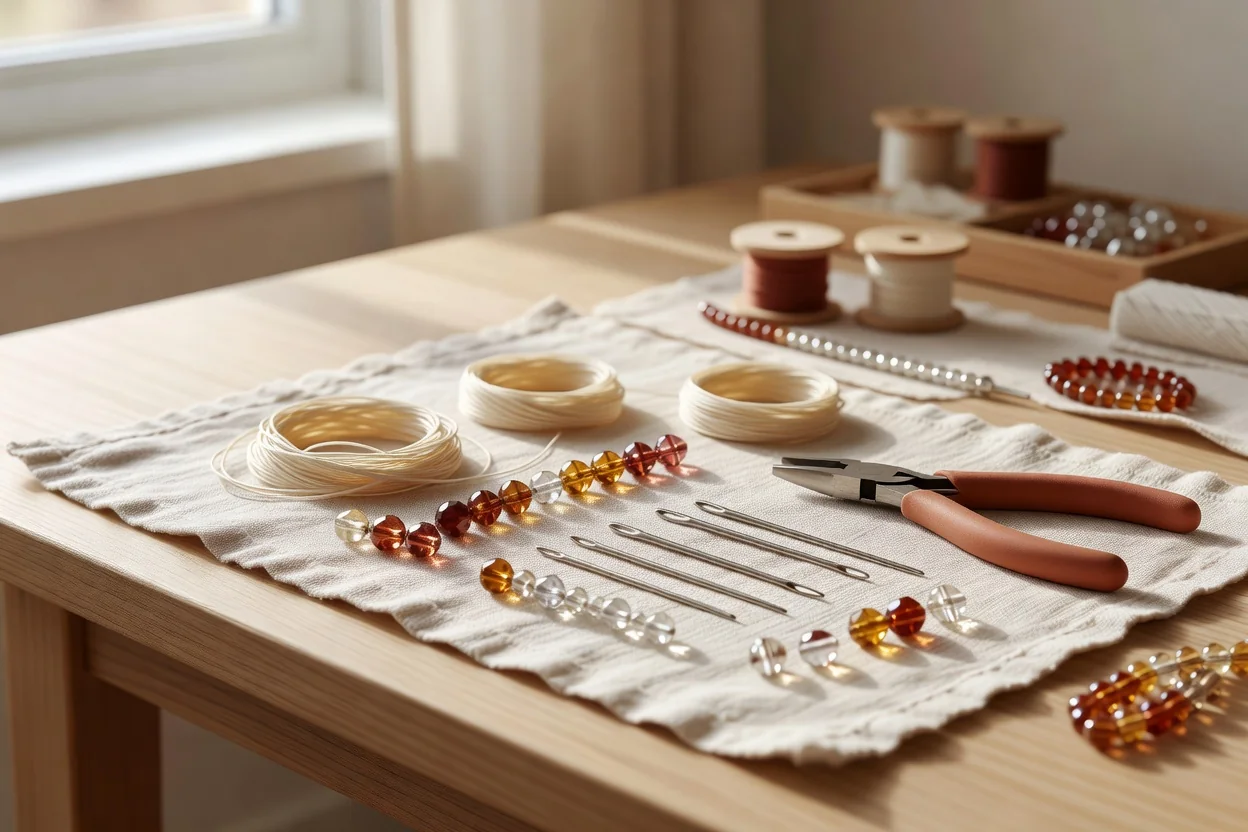
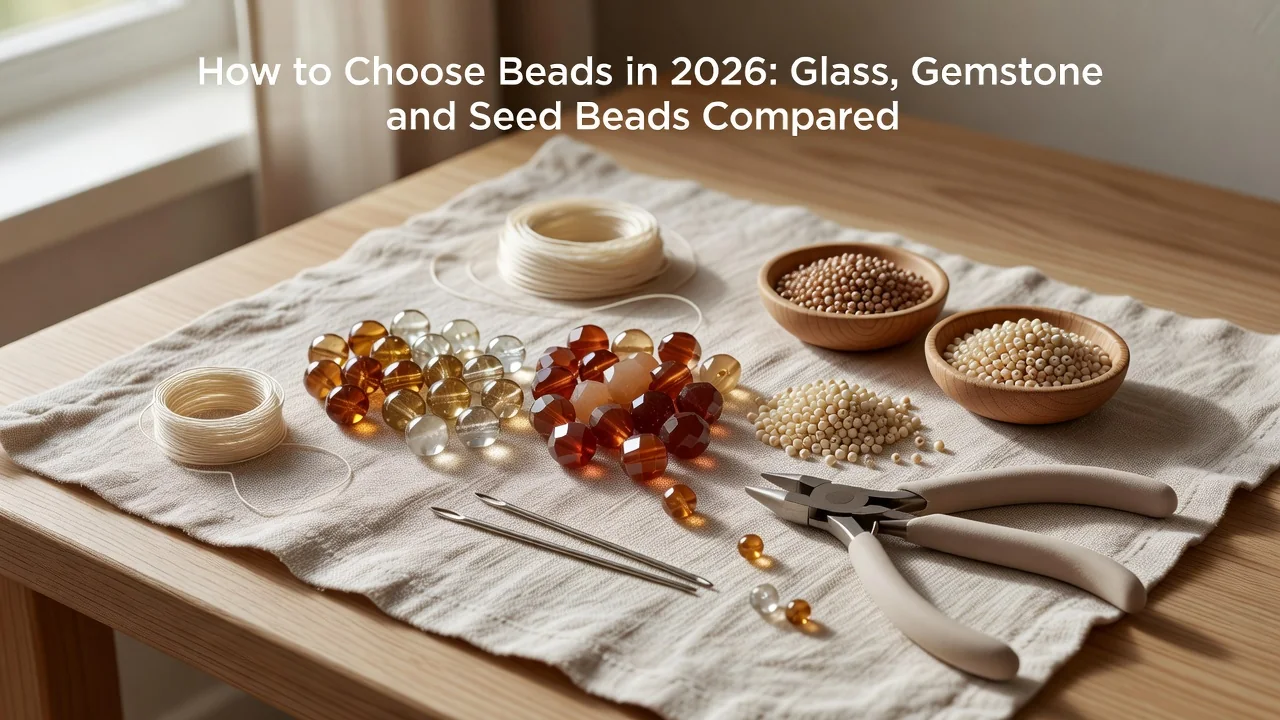
Czech pressed glass beads come in countless shapes—coins, drops, flowers, daggers—and their fire-polished versions add a subtle faceted sparkle. In 2026 many lines feature improved coatings that resist chipping better than older formulas, but you should still test colorfastness by leaving a sample in sunlight for a week. Hole sizes are generally consistent at 0.8–1.2 mm, making them easy to string on 0.5 mm cord or wire. Their moderate weight suits both earrings and longer necklaces without pulling on the ear or neck.
Japanese Seed Beads: Precision and Finish Matter
Japanese seed beads from Miyuki and Toho continue to set the standard for uniformity. Size 11/0 remains the workhorse for peyote, brick stitch, and loom work, while 8/0 works well for larger texture or as spacer beads. Look for the “A” or “AA” grade labels that indicate fewer off-shape beads per tube. Finishes range from transparent rainbow to opaque metallic; newer permanent galvanized coatings hold up far better than older plated versions. Always check the hole diameter—most 11/0 beads accept a 0.4 mm needle comfortably, but some metallic finishes narrow the hole slightly.
Gemstone, Wood, Ceramic, and Metal Accents
Natural gemstone beads vary widely in quality. Grade A stones show consistent color and minimal matrix, while lower grades may appear pale or heavily included. Many agates and jaspers receive dye or heat treatment to enhance color—ask the seller for details if the listing does not specify.
Wood beads bring warmth and lightness; choose sustainably sourced types that have been properly sealed to prevent swelling. Ceramic beads add earthy texture but can be brittle—test by gently tapping two together. Metal accent beads, often sterling silver, copper, or brass, provide professional polish; verify that any plating is thick enough to survive abrasion.
Before purchasing any beads, run these quick checks. Hold the strand up to strong light to spot cracks or coating gaps. Measure a few holes with a bead reamer or gauge to ensure your chosen thread or wire fits without forcing. Weigh a full strand on a small digital scale—lighter beads suit delicate designs, heavier ones create drape and presence. Rub a bead against white cloth to test for dye transfer. These habits take only minutes yet save hours of rework.
| Bead Type | Typical Price Range (per 50g or strand) | Durability | Best Use |
|---|---|---|---|
| Czech Fire-Polished Glass | $4–9 | High (coating dependent) | Necklaces, earrings, bracelets |
| Japanese Seed Beads (11/0) | $6–12 | Very High | Woven jewelry, loom work, fringes |
| Natural Gemstone (Grade A) | $12–35 | High (stone dependent) | Statement pieces, malas, focal beads |
| Wood & Ceramic | $5–14 | Medium | Bohemian styles, lightweight earrings |
| Metal Accent Beads | $8–22 | Very High | Professional finishes, connectors |
Weight per strand tells its own story. A 16-inch strand of 6 mm gemstone beads can weigh 45 grams, while the same length in 8/0 seed beads weighs under 12 grams. Factor this into clasp strength and overall comfort. In 2026 many sellers provide exact bead counts and weights per strand—use that data rather than guessing.
Ultimately, the best bead is the one that inspires you to finish the piece. Mix families thoughtfully: a row of gemstone rondelles framed by tiny Japanese seeds and punctuated with a Czech glass drop often creates the richest designs. Keep notes on what worked and what chipped after six months of wear. Over time you will develop an instinctive feel for which beads belong together and which should stay on separate shelves. The joy of making jewelry in 2026 lies in this quiet conversation between maker, material, and future wearer.
- Test one bead for coating durability before committing to a full strand
- Match hole size to your thread or wire gauge
- Consider finished jewelry weight for comfort and clasp choice
- Buy small test quantities of unfamiliar finishes or stone treatments
- Check for dye transfer on light fabric before combining colors