Buying Beads Online vs Local Shops: Getting Quality Without Overpaying
In 2026 the bead world offers more choices than ever. Online marketplaces burst with global inventory while neighborhood craft stores and specialist bead shops let you hold the goods before you buy. The real skill lies in knowing which channel suits each project and how to avoid paying premium prices for mediocre quality.
Online shopping excels at selection and price. A single search can surface rare vintage glass, tiny 2 mm gemstone rounds, or wholesale strands that would take months to hunt down locally. Specialist bead shops shine when you need to see true color under natural light and inspect hole quality, finish consistency, and drilling precision. Local craft stores often sit in between: convenient but with narrower ranges and higher per-bead costs on anything beyond basics.
Reading a Listing Without Getting Surprised
Every serious listing should state bead size in millimetres, strand length or piece count, hole size, and exact material. Look for phrases like “natural lapis, not dyed” or “reconstituted turquoise.” Vague descriptions such as “gemstone beads” or “blue howlite” often signal treatment. Check the photos for consistent color across multiple angles and zoom in on the holes; rough or off-center drilling shows up clearly on close-ups. When a seller lists “AAA grade” without photos of the actual strand, treat it as marketing fluff.
Warning Signs and Smart Testing Habits
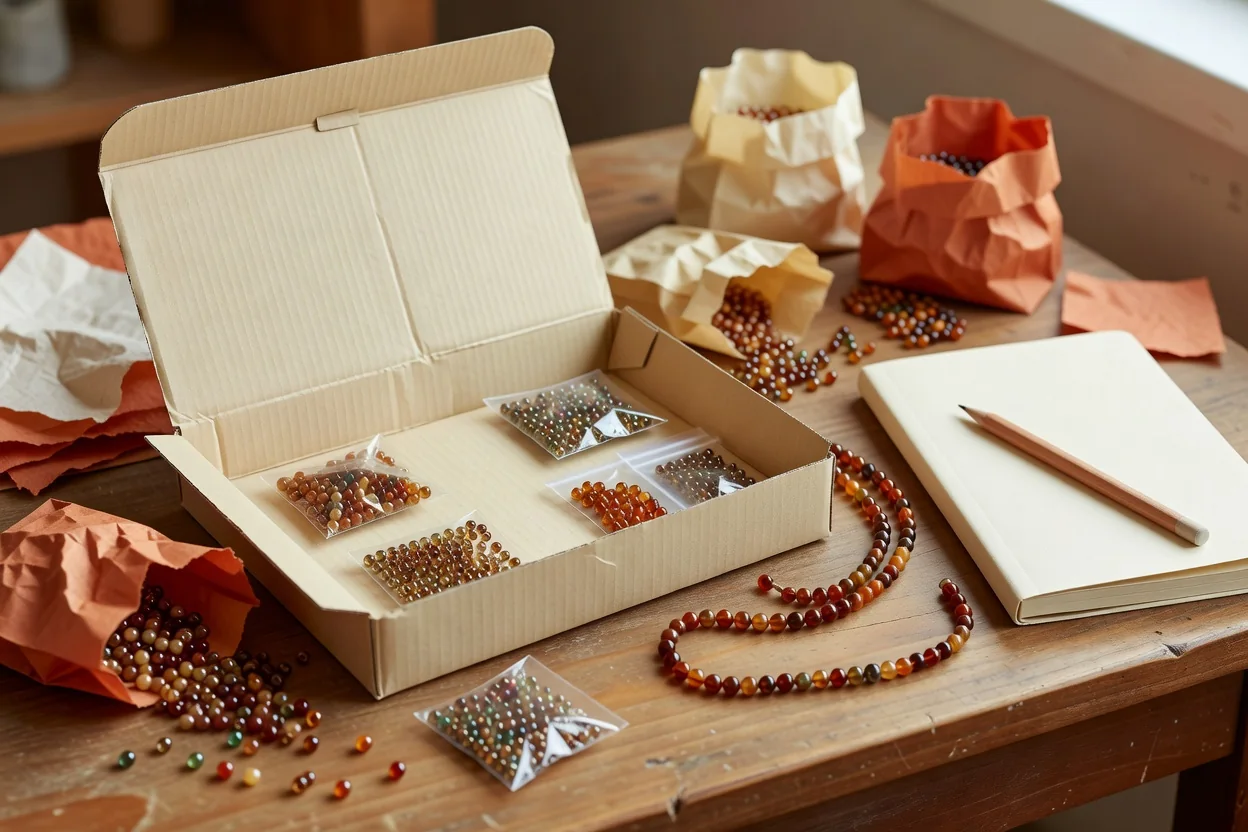
Dyed or reconstituted gemstone beads frequently appear too uniform or unnaturally vivid. Many turquoise and jade look-alikes are stabilized or entirely man-made; the giveaway is a price that seems too good for the claimed material. Buying a small test quantity first—often ten to twenty beads—lets you check color in your own workspace, test stringing compatibility, and evaluate finish durability before committing to larger amounts. This habit prevents expensive mistakes when a color shifts under studio lighting or holes snag your thread.
Planning quantities requires a realistic margin. Experienced makers usually add 10–15 percent extra for breakage, lost beads, and matching future repairs. International orders under ten dollars can carry shipping fees that double the final cost; always calculate total landed price before clicking buy. Domestic specialist shops sometimes match online prices once you factor in shipping and wait times.
| Buying Channel | Selection | Color Accuracy | Risk Level |
|---|---|---|---|
| Online Marketplaces | Very High | Medium (depends on photos) | Higher if new seller |
| Specialist Bead Shops | High | Very High | Low |
| Local Craft Stores | Medium | High | Low |
Practical Checklist Before You Buy
- Verify the seller’s recent reviews specifically mentioning bead quality and shipping speed.
- Read the return policy carefully; some shops accept returns only on unopened strands.
- Compare total cost including shipping, tax, and any currency conversion.
- Order a test batch when trying a new material or unfamiliar vendor.
- Keep notes on successful suppliers so future projects go faster.
Whether you prefer the tactile joy of browsing local shops or the convenience of late-night online hunts, the same principles apply: know what you need, read listings with care, and start small when something looks suspicious. In 2026 the best deals still go to makers who combine curiosity with healthy skepticism. Check seller reviews and return policies yourself every time; policies change and honest feedback from recent buyers remains your strongest guide.