Packaging and Shipping Handmade Jewelry So It Arrives Intact
In 2026, small-batch jewelry makers face the same delicate challenge as always: getting fragile, often one-of-a-kind pieces from studio to customer without scratches, bent wires, or tangled chains. The right packaging does more than protect; it turns the unboxing moment into a quiet extension of your brand. Thoughtful choices show buyers you respect both the work and the journey it must survive.
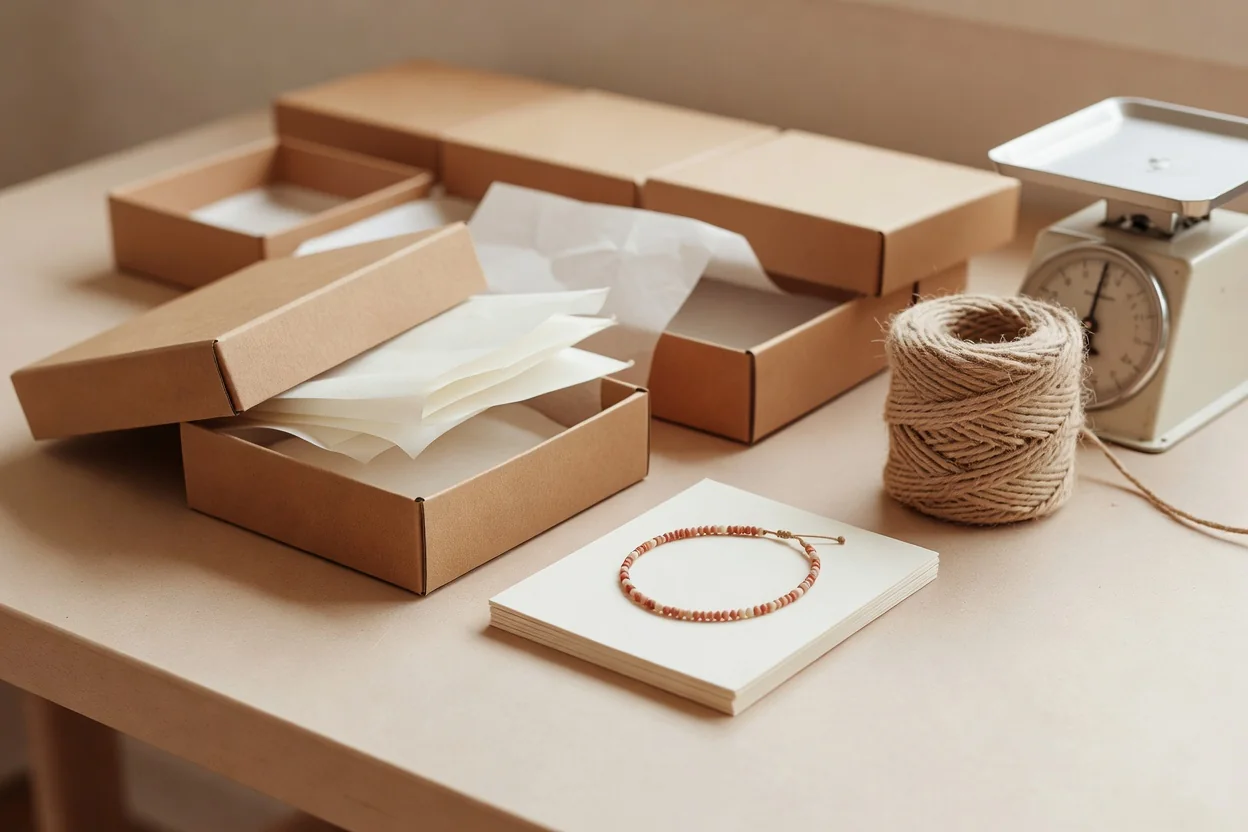
Start by matching the package to the piece. Earrings need rigid backing so posts cannot puncture tissue or bend. A simple earring card slipped inside a small kraft box keeps everything flat. Necklaces and bracelets travel best on display cards or wrapped around slotted cardboard inserts that prevent tangling. For longer chains, thread them through a drinking straw before sealing the clasp; the straw keeps loops from knotting during rough handling. Delicate beadwork and wire-wrapped gems deserve a layer of bubble wrap or foam padding that cradles without pressing directly on stones.
Branding on a Budget
Customers remember the entire experience. A care card printed with cleaning instructions and a short thank-you note costs pennies yet feels personal. Plain cotton-filled boxes wrapped in colored tissue and sealed with a branded sticker create an affordable yet polished look. Avoid over-the-top fillers that add weight and shipping cost. The goal is protection first, presentation second. Many makers reuse sturdy mailers and simply refresh the interior with fresh tissue each time.
Weighing, Tracking, and International Realities
Always weigh the fully packed order on a digital scale before choosing a shipping method. Rates in 2026 continue to favor honesty; under-reporting weight risks penalties or damaged trust. Domestic tracked shipping adds a few dollars but gives both you and the buyer peace of mind.
Untracked options remain cheaper for very small, low-value items under $30, yet they leave you with little recourse if the parcel goes missing. For international orders, double-box fragile pieces and choose carriers that offer tracking and basic insurance by default. Rules change yearly, so check current carrier rates and restrictions directly before quoting shipping at checkout.
When a parcel is lost or arrives damaged, respond quickly. Document the interior packaging with photos at the time of shipping. Most platforms expect sellers to offer replacements or refunds for items valued under a certain threshold. Clear policies posted on your site prevent disputes. For higher-value pieces, consider adding optional declared value coverage when available.
Packaging Levels Compared
| Level | Materials | Protection | Illustrative Cost per Order |
|---|---|---|---|
| Basic | Poly mailer, tissue, sticker | Light items, low risk | $0.40–$0.90 |
| Standard | Kraft box, earring card, bubble wrap | Most necklaces and earrings | $1.20–$2.50 |
| Premium | Double-box, foam insert, rigid mailer | International or delicate beadwork | $3.00–$5.50 |
Choose the level that matches your average order value and customer expectations. Many makers begin with standard packaging and upgrade only for international or high-value sales. The extra dollar spent on proper materials almost always pays for itself in fewer returns and happier repeat buyers. Test shipments across different carriers during slower months to see how your chosen system holds up in real-world conditions.
Ultimately, reliable packaging and transparent shipping build the kind of trust that turns first-time buyers into long-term collectors. In an era when customers can order almost anything online, the jewelry that arrives exactly as imagined stands out the most.
- Photograph every packed order before sealing the outer mailer
- Include a simple care card with each piece
- Re-weigh packed orders monthly to catch changes in material weight
- Keep extra padding materials on hand for last-minute international orders