How to Clean and Store Handmade Beaded Jewelry
Handmade beaded jewelry deserves thoughtful care. Unlike mass-produced pieces, each strand carries hours of careful work, chosen stones, and often delicate thread or wire. A few gentle habits can keep colors bright, metals untarnished, and threads strong well into 2026 and beyond.
Every material reacts differently to water, chemicals, and friction. Glass and crystal beads usually tolerate mild cleaning, but porous gemstones like turquoise, howlite, or pearls absorb liquids and can discolor or crack. Plated findings are especially vulnerable; once the thin layer wears, moisture speeds up corrosion. Solid sterling or gold-filled components are more forgiving yet still prefer minimal exposure. Ultrasonic cleaners send vibrations through the entire piece that can snap threads or loosen crimps, while harsh chemicals etch soft metals and strip delicate coatings.
Safe Home Cleaning Routine
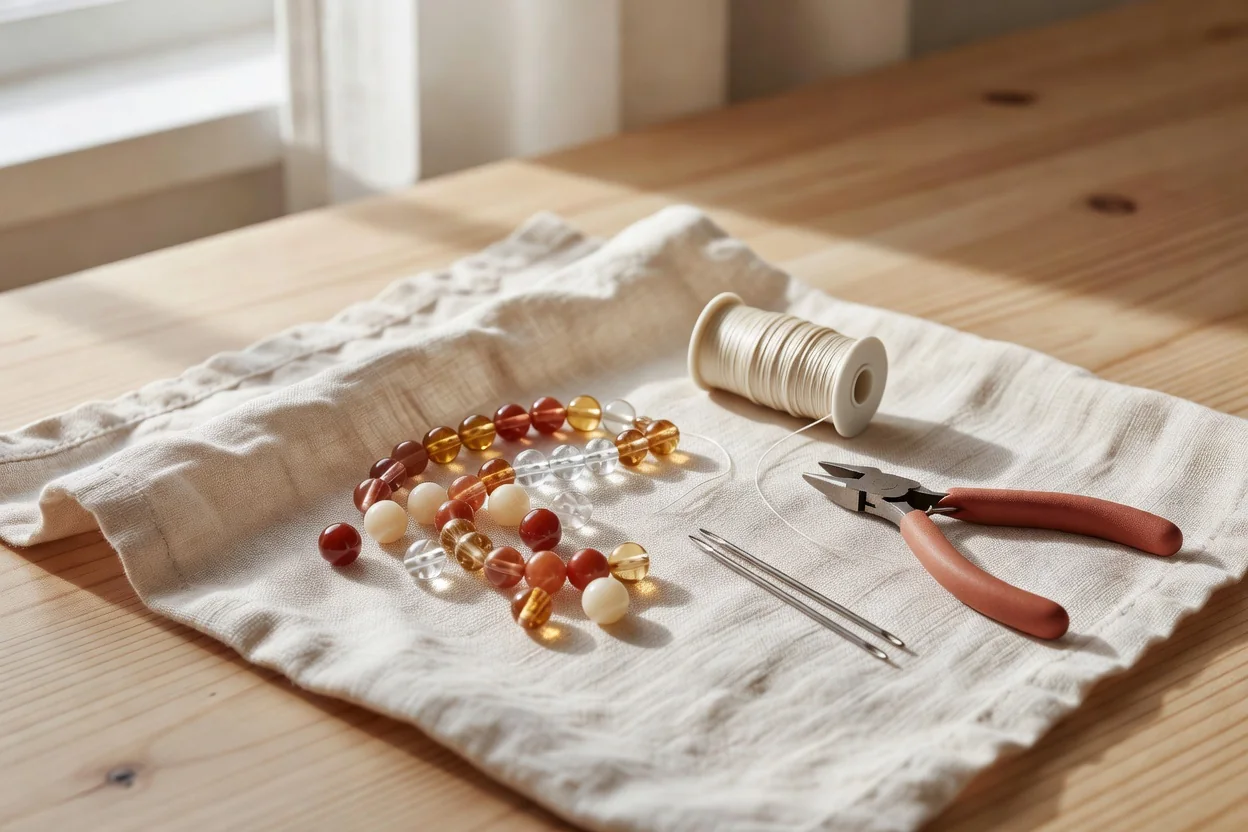
Begin by laying the piece flat on a soft towel. Use a microfiber cloth barely dampened with distilled water and a drop of pH-neutral dish soap. Wipe each bead individually, paying attention to crevices where dust collects. Never soak strung jewelry. Rinse with a second cloth dampened only with distilled water, then pat dry and lay flat on a clean towel away from direct sun or heat vents. Allow at least two hours before wearing or storing. This method removes everyday oils without stressing the stringing material.
Storage Practices That Protect Your Collection
Store pieces separately to prevent tangling and abrasion. Hanging necklaces on individual hooks preserves their shape, while bracelets and earrings do better lying flat in compartmentalized trays. Anti-tarnish strips inside closed boxes absorb sulfur that causes silver to darken. Keep everything away from windows, bathrooms, and kitchens where humidity and temperature swings occur. Small silica gel packets inside jewelry boxes offer extra insurance against moisture that can weaken silk or nylon thread over time.
- Check thread tension monthly; a slight stretch is normal, but visible gaps between beads signal time to restring.
- Inspect crimp beads and clasps for wear; flattened or loose crimps should be replaced immediately.
- Look for frayed silk or nylon near knots; even one broken fiber can lead to sudden failure.
- Restring any piece that has been worn more than fifty times or shows signs of thread discoloration.
When to Restring
Even the best care cannot prevent eventual wear. Silk thread stretches and frays, nylon can yellow, and beading wire eventually kinks. If beads slide too freely, knots appear loose, or you notice metal findings pulling away from the stringing material, schedule a restringing. Most handmade pieces benefit from fresh thread every one to three years depending on frequency of wear. A professional or careful home restring with the correct gauge and knotting technique will restore both strength and drape.
| Material | Safe Cleaning | What to Avoid |
|---|---|---|
| Glass & crystal beads | Mild soap on damp cloth, distilled water rinse | Ultrasonic, bleach, ammonia |
| Turquoise, pearls, porous stones | Dry soft cloth only | Any liquid, steam, chemicals |
| Plated findings | Wipe with dry microfiber | Water, polishing cloths with abrasives |
| Solid silver or gold-filled | Mild soap, gentle dry | Ultrasonic, harsh dips |
Treating each piece as the small artwork it is takes only minutes per month yet preserves both beauty and value. With these habits, your handmade beaded jewelry can remain a daily pleasure rather than a fragile keepsake tucked away in a drawer.