Beaded jewelry as heirloom: how to design pieces that last generations
There is a necklace in a drawer somewhere that belonged to your grandmother. You may not remember her wearing it, but you remember the drawer — the weight of it sliding open, the scent of cedar, the sudden flash of glass beads catching a stripe of afternoon light. Nobody told you it was precious. Nobody wrote a label. But it survived four decades, two house moves and the quiet erosion of everything else in that drawer because someone, at some point, treated it as if it mattered. That is the essence of an heirloom. It is not about expense or rarity — it is about whether a piece was built to outlast the hands that made it. Most beaded jewelry is not. It is designed to look beautiful on the day it is sold, and the decisions that would make it survive fifty years are never made. Changing that requires thinking beyond durability into territory that most beading guides never enter: structural philosophy, repairability, emotional anchoring and the quiet engineering choices that separate a piece people keep from a piece people throw away.
What separates an heirloom from a keepsake
Durability and heirloom quality are not the same thing. A piece can be physically robust — strong thread, hard beads, a sturdy clasp — and still be discarded after a few years because it cannot be repaired, its design feels dated, or it carries no story worth preserving. Conversely, a fragile antique rosary or a strand of trade beads can survive centuries precisely because each generation valued it enough to restring, re-knot and re-clasp it. The difference lies in a combination of four qualities that interact with each other rather than existing independently: material permanence, structural serviceability, aesthetic timelessness and narrative weight.
Material permanence is the foundation — choosing beads and components that do not degrade, fade, crack or corrode over decades. Structural serviceability means designing the piece so that when something inevitably fails, it can be fixed without destroying the design. Aesthetic timelessness is the hardest to engineer intentionally, but it involves making color and form choices that do not scream a specific trend or decade. Narrative weight is the human layer — the story, inscription, provenance or occasion that gives the piece a reason to be saved rather than sold.
A piece that scores well on all four of these dimensions has a genuine chance of becoming an heirloom. A piece that excels on one or two but neglects the others will be appreciated, worn, and eventually forgotten. Understanding how each dimension works in practice is what allows a designer to make intentional choices rather than hoping for the best.
Material permanence: choosing beads that age gracefully
The single most important decision in heirloom jewelry design is the bead material itself. Every other choice — thread, clasp, technique — can be replaced or repaired, but the beads are the soul of the piece. If they degrade, the piece loses its identity no matter how well it was strung.
Natural stone is the gold standard for heirloom beaded jewelry. Minerals like garnet, amethyst, citrine, peridot, ruby, sapphire and diamond-tier stones are rated 7 or higher on the Mohs hardness scale, meaning they resist scratching, chipping and chemical weathering. These materials do not fade in sunlight, do not react with skin oils and do not deteriorate with humidity. A strand of well-cut garnet beads made in 1900 looks essentially the same today as it did then, provided it was stored reasonably. Softer stones — turquoise (5-6), opal (5.5-6.5), pearls (2.5-4.5) — require more careful handling and storage but can still last generations if the design accounts for their vulnerabilities.
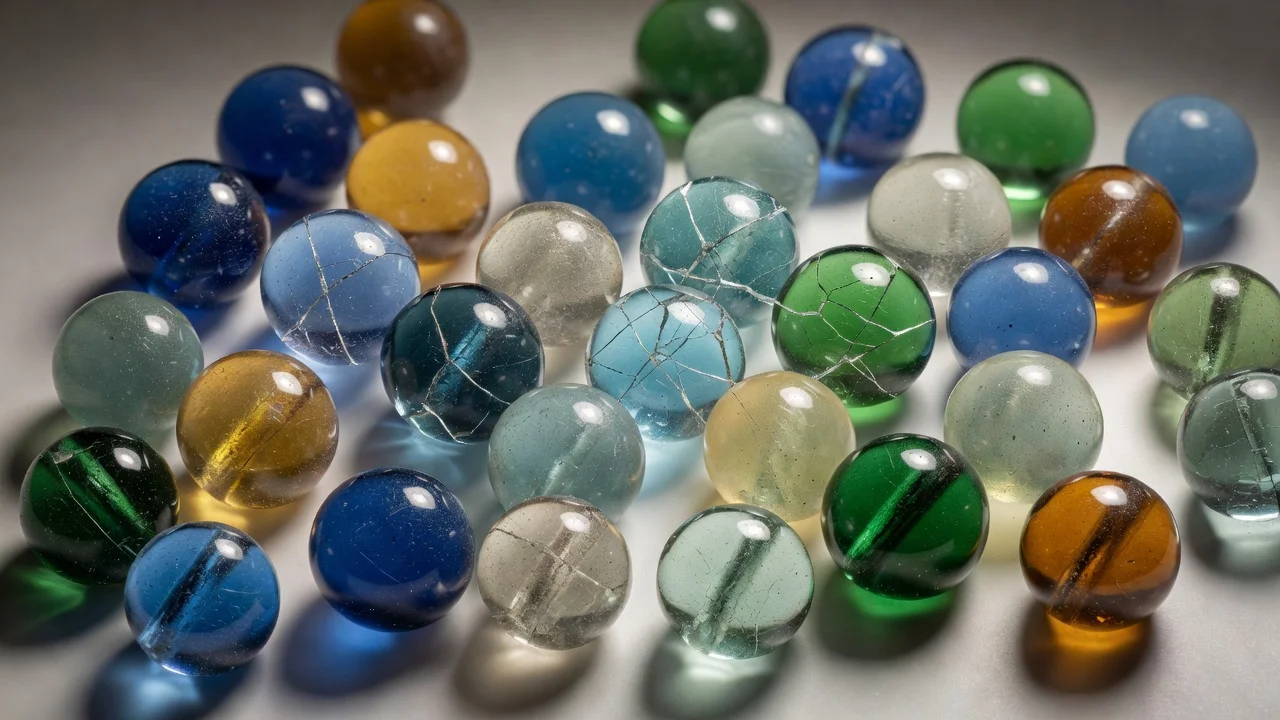
Glass beads occupy a middle tier. High-quality Venetian and Czech glass is chemically stable and will not degrade, but it is brittle. A dropped strand can shatter a bead that a stone would shrug off. Lower-quality glass — particularly coated or plated glass beads — can lose their surface finish over time as the coating wears or reacts with skin chemistry. For heirloom purposes, uncoated, solid-color glass is a safer choice than coated finishes, no matter how attractive the coating looks on day one.
The materials that designers should approach with caution for heirloom work include:
- Acrylic and plastic beads — lightweight and inexpensive, but they scratch easily, yellow with UV exposure, and their surface finish degrades within a few years. No acrylic bead has ever become an heirloom.
- Coated or dyed beads — surface coatings on glass or stone can wear off through normal contact with skin, clothing and cleaning. The bead underneath may be durable, but its appearance changes. Always ask whether the color goes through the bead or sits on top of it.
- Wooden beads — beautiful and organic, but wood is hygroscopic: it absorbs moisture, expands and contracts, and can crack or warp over decades. Treated or lacquered wood fares better but still cannot match the longevity of stone or glass.
- Pressed paper or composite beads — sometimes marketed as eco-friendly, these degrade rapidly with any moisture exposure and have no place in heirloom design.
- ** plated metal beads** — silver or gold plating over a base metal core wears through eventually, exposing the base metal to corrosion. Use solid precious metal or verifiably permanent finishes instead.
The thread or stringing material is equally critical to longevity, though it is invisible in the finished piece. Silk thread, the traditional choice for pearl knotting, is strong but organic — it stretches, absorbs moisture and degrades over 15 to 25 years. Nylon threads like Nymo or Silamide are more durable but still subject to UV degradation. The most serviceable choice for heirloom work is a high-tenacity synthetic like Beadalon 49-strand beading wire or Kevlar thread, both of which resist stretching, moisture and abrasion for decades. The trade-off is that these materials are harder to knot and less traditional, but an heirloom that lasts 50 years on Kevlar is worth more than one that snaps at 20 years on silk.
Structural serviceability: designing for repair
Every piece of beaded jewelry will eventually need repair. Thread stretches, clasps fail, beads chip. The question is not whether the piece will break — it is whether the breakage is catastrophic or manageable. An heirloom-quality design anticipates failure and makes it fixable.
The most important structural decision is whether to knot between beads. Knotting — placing a knot between each bead on the thread — serves two purposes. First, if the thread breaks, only one bead falls free rather than the entire strand scattering across the floor. Second, the knots cushion the beads against each other, reducing the friction that causes chipping and wear over time. Knotting is traditional for pearls and fine stone strands, and it should be considered for any piece intended to last decades. The downside is that knotting is slower to execute and more difficult to repair, since each knot must be individually untied or cut during restringing.
The choice of clasp is the second most critical structural decision. A clasp is the most frequently stressed component in any necklace or bracelet — it is opened and closed daily, subjected to pulling, twisting and accidental snags. A stamped base-metal lobster clasp will fail within a few years of regular wear. A solid sterling silver or 14k gold clasp — particularly a box clasp with a safety catch or a multi-strand slide clasp — will last decades and can be replaced without disturbing the beadwork if it does eventually wear out.
The clasp-to-thread connection is a common point of failure that is almost never discussed in beading guides. The way the thread or wire attaches to the clasp determines whether a broken clasp can be swapped out without restringing the entire piece. The best practice is to use a beading wire with a crimp tube secured inside a crimp cover, attached to the clasp via a split ring rather than a jump ring. Split rings do not open under tension the way jump rings can, and the crimp cover protects the wire from the sharp edges of the clasp attachment point.

Aesthetic timelessness: designing beyond trends
A piece that looks stunning in 2026 can look dated in 2046 if it is tied to a specific fashion cycle. Heirloom design requires restraint — not in beauty, but in trend-dependence. The pieces that survive across generations tend to share certain visual qualities that read as timeless rather than period-specific.
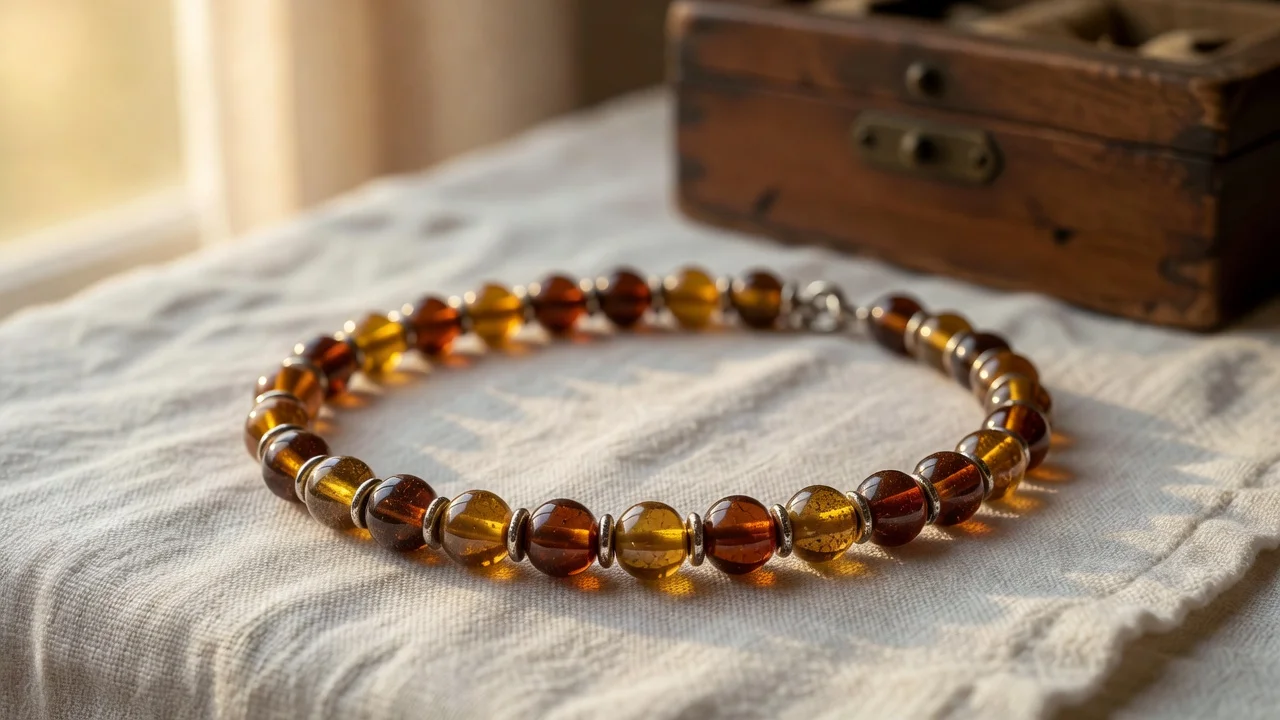
The most enduring aesthetic choices in beaded jewelry center on color permanence and proportion. Deep, saturated gemstone colors — garnet red, sapphire blue, emerald green, amber gold — have been valued in jewelry for centuries and carry no era signature. Pastel palettes, neon accents and ombré gradients are more trend-sensitive and may read as "2020s" to a future generation. Symmetrical patterns and graduated bead sizes — where beads increase in size from the clasp toward the center — have been used in jewelry from ancient Egypt to Art Deco to contemporary design, and carry no temporal stamp. Asymmetrical, freeform or deconstructed patterns are more contemporary in feel and may or may not age gracefully depending on execution.
The proportion of the piece also matters. Medium-scale beads — 4mm to 8mm — are the most timeless. Very small beads (2mm and under) read as delicate and vintage, which can be either an asset or a limitation depending on the intended aesthetic. Very large beads (12mm and above) read as bold and statement-oriented, which is more trend-dependent. A graduated strand from 4mm to 8mm is the most universally wearable scale across generations, body types and fashion eras.
The comparative longevity of common design choices
To make the abstract principles of heirloom design concrete, it helps to see how specific material and structural decisions compare in terms of their expected lifespan under normal wear-and-storage conditions. The overview below rates common beading choices across the dimensions that matter most for generational longevity.
| Design element | Low longevity choice | Moderate longevity choice | Heirloom-grade choice |
|---|---|---|---|
| Bead material | Acrylic, coated glass, paper composite | Uncoated glass, dyed stone, plated metal | Natural stone 6+ Mohs, solid precious metal, uncoated Venetian glass |
| Stringing material | Elastic cord, cotton thread | Silk thread, single-strand nylon | 49-strand beading wire, Kevlar thread, heavy-duty nylon |
| Clasp type | Base-metal lobster, spring ring | Sterling lobster, magnetic clasp | Solid gold or silver box clasp with safety, multi-strand slide clasp |
| Connection method | Jump ring to clasp | Crimp tube directly to clasp | Crimp tube in crimp cover, split ring to clasp |
| Bead separation | No knots, beads touching | Occasional spacing beads | Knotted between every bead |
| Surface treatment | Dyed or coated beads | Heat-treated stone, stabilized turquoise | Untreated natural stone, solid-color glass |
The pattern across these categories is consistent: heirloom-grade choices are not always the most expensive, but they are the most considered. A strand of uncoated Czech glass beads on 49-strand wire with a solid silver box clasp may cost less than a coated-crystal necklace on silk thread, but it will outlast the latter by decades. The investment is in the engineering, not the materials — though the best heirlooms usually combine both.
Storytelling and emotional anchoring
Physical durability is necessary but not sufficient. A piece becomes an heirloom when someone decides it is worth saving, and that decision is driven by emotion, not engineering. The narrative layer — the story attached to the piece — is what transforms a well-made necklace into something a granddaughter reaches for when she wants to feel connected to a person she barely knew.
Storytelling in jewelry design can be built in deliberately. A piece commissioned for a specific occasion — a wedding, an anniversary, a birth — carries its story by definition. But even pieces made without a specific occasion can be given narrative weight through thoughtful choices. Using beads that come from a specific place — turquoise from a particular mine, coral from a particular sea, glass from a particular Murano furnace — gives the piece a geographic provenance that can be passed along. Incorporating a single unusual or rare bead as a focal point gives the piece a feature that can be described and remembered. Even the choice of pattern can carry meaning: a repeating motif that echoes a family symbol, a cultural tradition or a personal significance adds a layer that outlasts the aesthetic.
Some designers go further by including a written provenance — a small card, an inscription on the clasp, or a digital record — that documents the maker, the date, the materials and the intended story. This practice, borrowed from fine jewelry and art provenance, costs almost nothing and dramatically increases the likelihood that a piece will be preserved. A future owner who knows the story will keep what a future owner who knows nothing will discard.
Care, storage and the transfer between generations
Even the best-designed heirloom piece will not survive if it is mistreated. Part of designing for longevity is building in care expectations — choosing materials and structures that are forgiving of ordinary neglect, and providing guidance that helps the wearer maintain the piece without specialized knowledge.
The materials and structures most forgiving of neglect are solid stone beads on synthetic wire with metal-on-metal clasps. These can be wiped clean with a soft cloth, stored in a fabric pouch or box, and worn regularly without concern. The most vulnerable designs — knotted silk with pearls, strung beads with organic thread, pieces with soft stones — require more active care: flat storage to prevent stretching, avoidance of water and cosmetics, and periodic restringing every 15 to 25 years.
A practical care and maintenance routine for beaded heirloom jewelry should address the most common forms of degradation:
- Store pieces flat, not hanging — gravity stretches thread and wire over time. A necklace stored on a hook for a decade will be measurably longer than one stored flat in a lined box.
- Keep pieces separated from each other — harder beads scratch softer ones. A strand of garnet stored next to a strand of pearl will abrade the pearl surface within months.
- Avoid exposure to perfumes, lotions and cosmetics — these chemicals can degrade silk thread, discolor plated metal and etch the surface of softer stones. Put jewelry on after applying products and allow them to absorb first.
- Clean with a dry soft cloth, not liquid cleaners — most beaded jewelry should never be submerged in cleaning solutions. Liquid can wick into the thread, degrade knot integrity and leave residue inside drilled bead holes.
- Restring before failure, not after — the most common cause of catastrophic bead loss is waiting until the thread breaks. A proactive restringing every 15 to 20 years — or whenever the thread begins to look frayed, stretched or discolored — prevents the loss of beads and preserves the piece.
- Document the piece for the next generation — include the maker's name, date of creation, materials used and any story or significance. A small note inside the storage box ensures the piece arrives in the next pair of hands with its identity intact.
Following these practices does not guarantee immortality — no object lasts forever without active conservation. But a piece that is stored flat, kept dry, restrung proactively and accompanied by its story has a survival probability that dwarfs one thrown into a jewelry box with a tangle of other pieces and no record of why it matters.
The maker's responsibility
Designing beaded jewelry as heirloom is an act of optimism. It is a bet that the piece will matter to someone long after the maker's hands have stopped working, that the materials will hold, that the story will be told. Not every piece will make it — some will be lost, some will be broken beyond repair, some will simply fall out of a family's orbit. But the ones designed with permanence, serviceability, timelessness and narrative in mind have a fighting chance. And the maker who makes those choices, piece after piece, builds something larger than a portfolio: a body of work that has a future beyond the present.